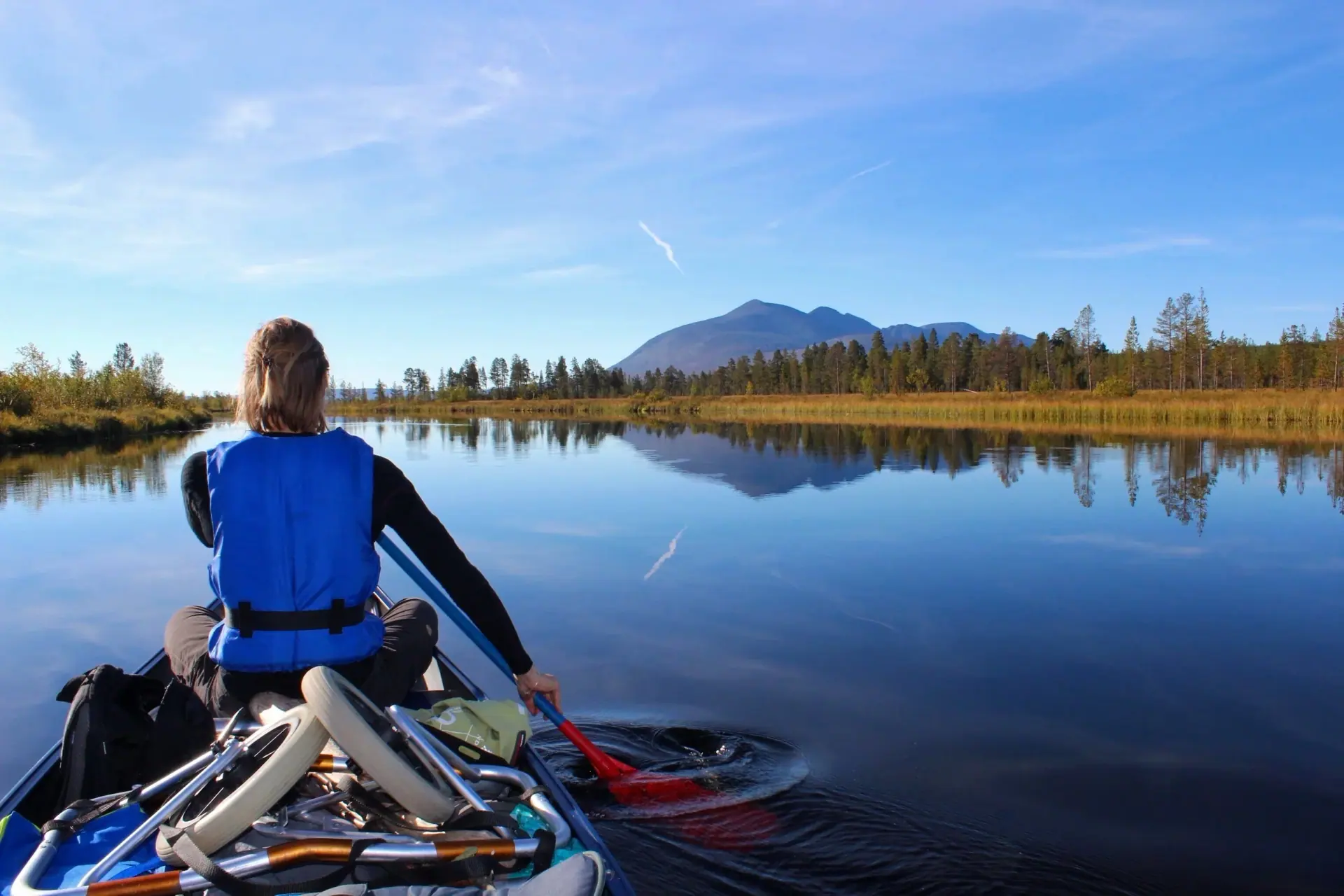
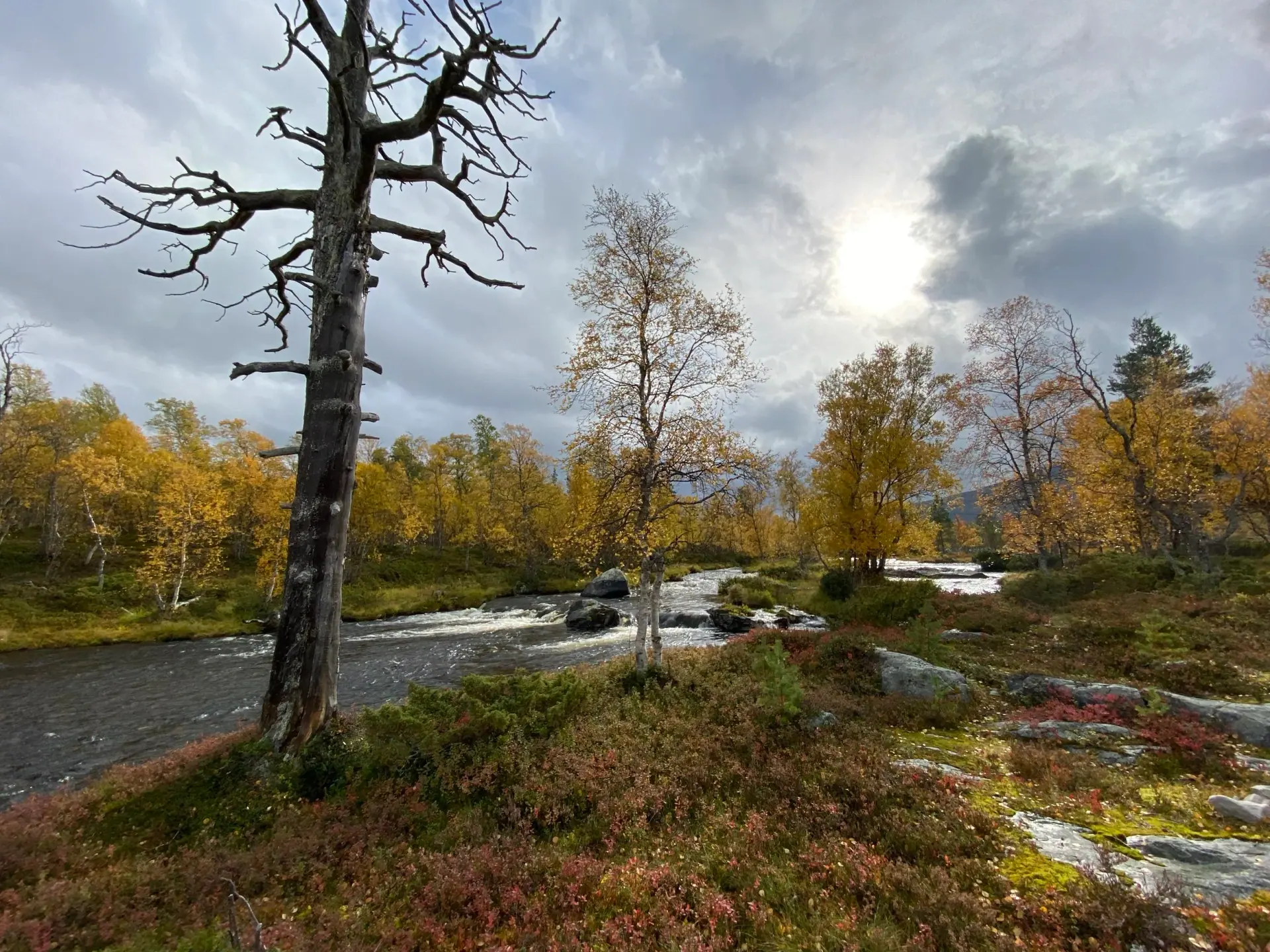
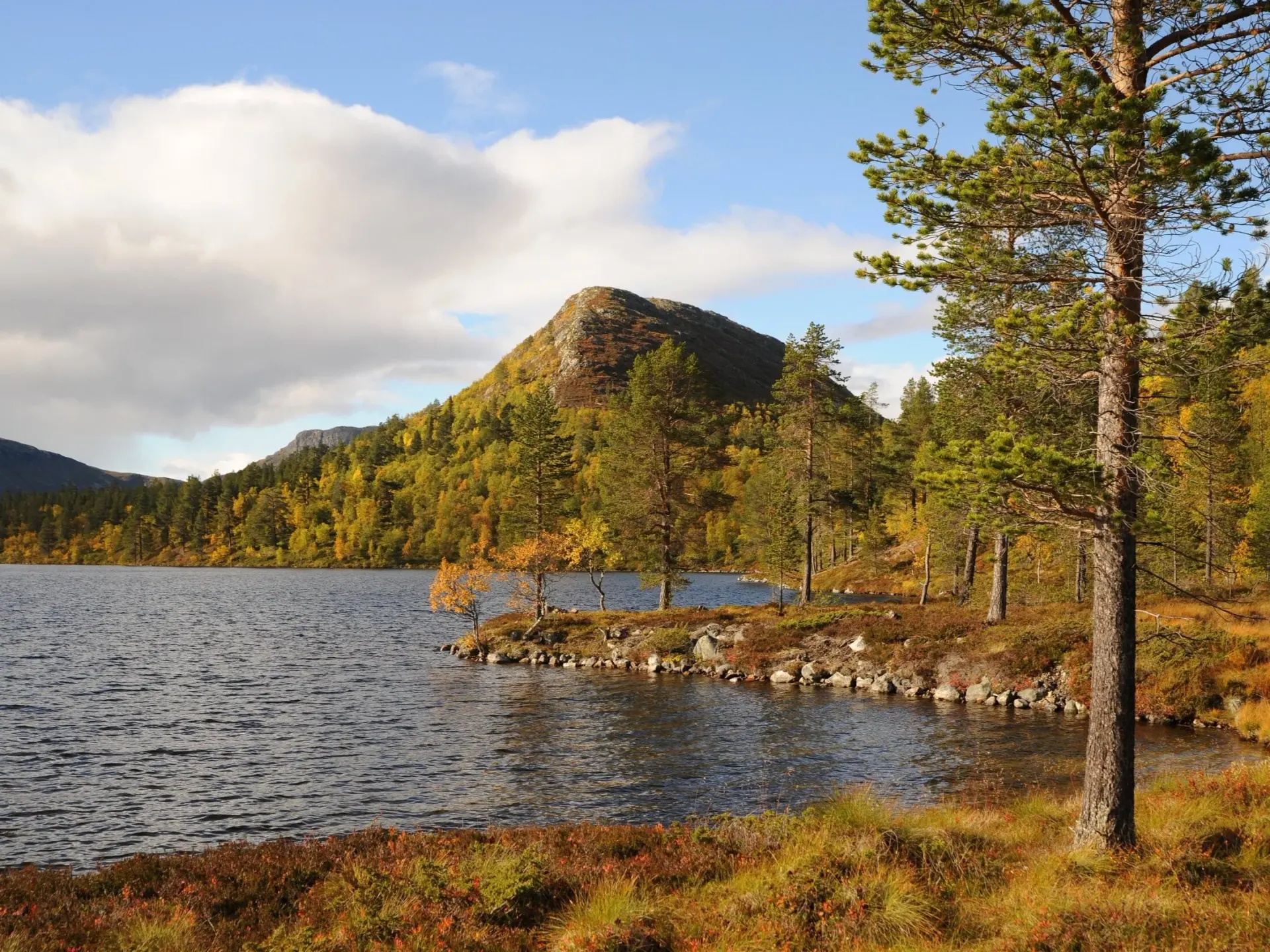
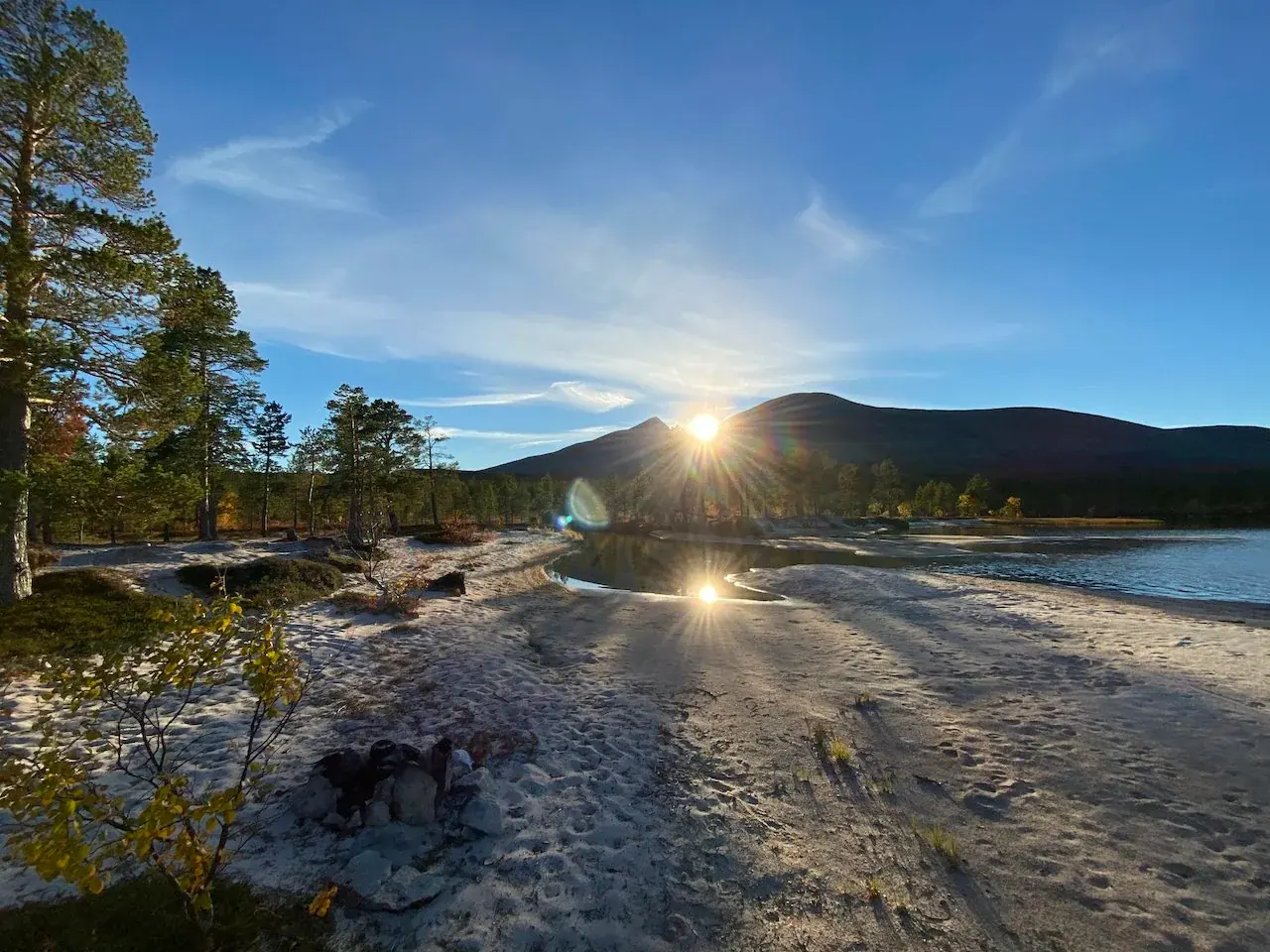
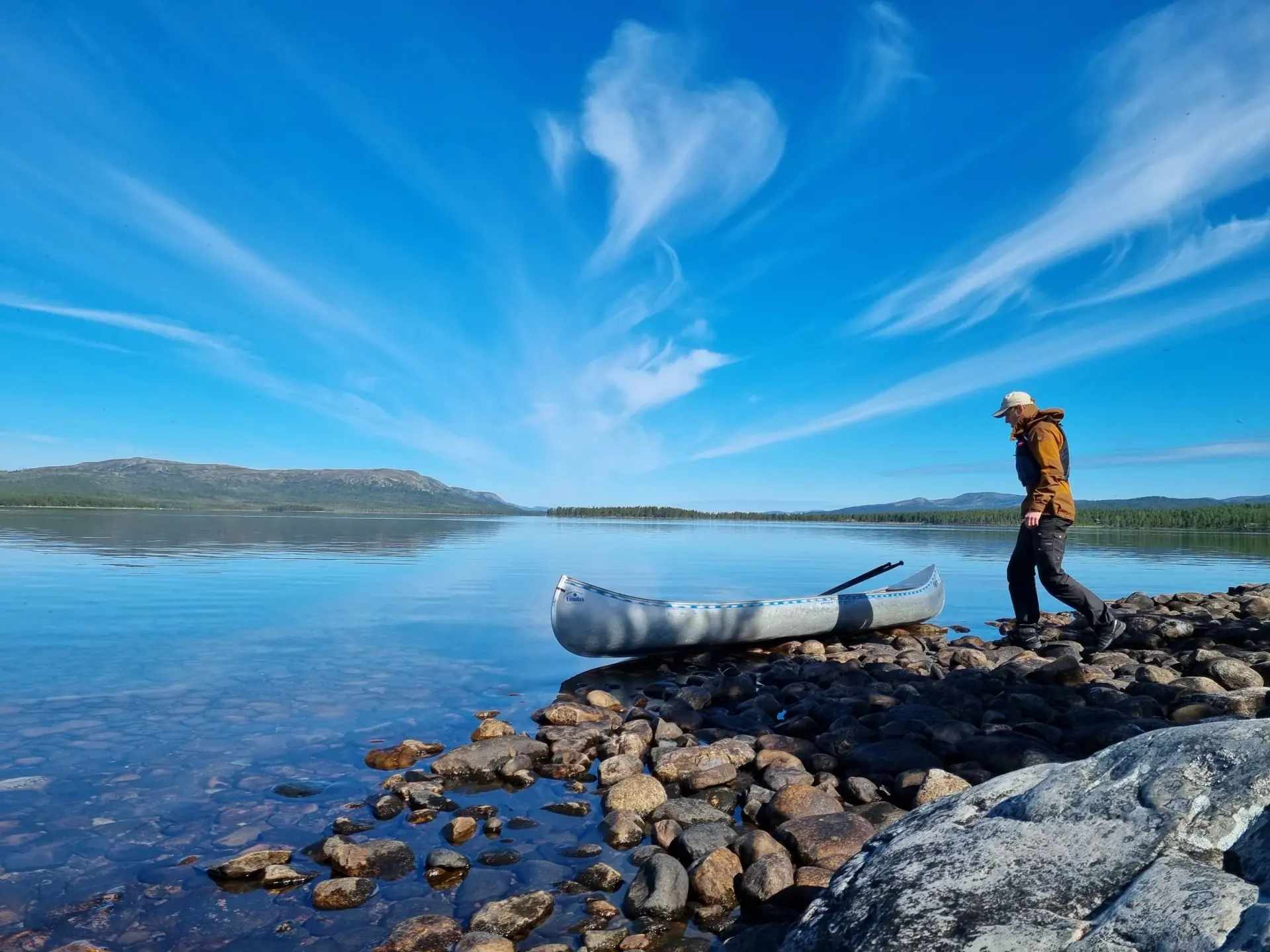
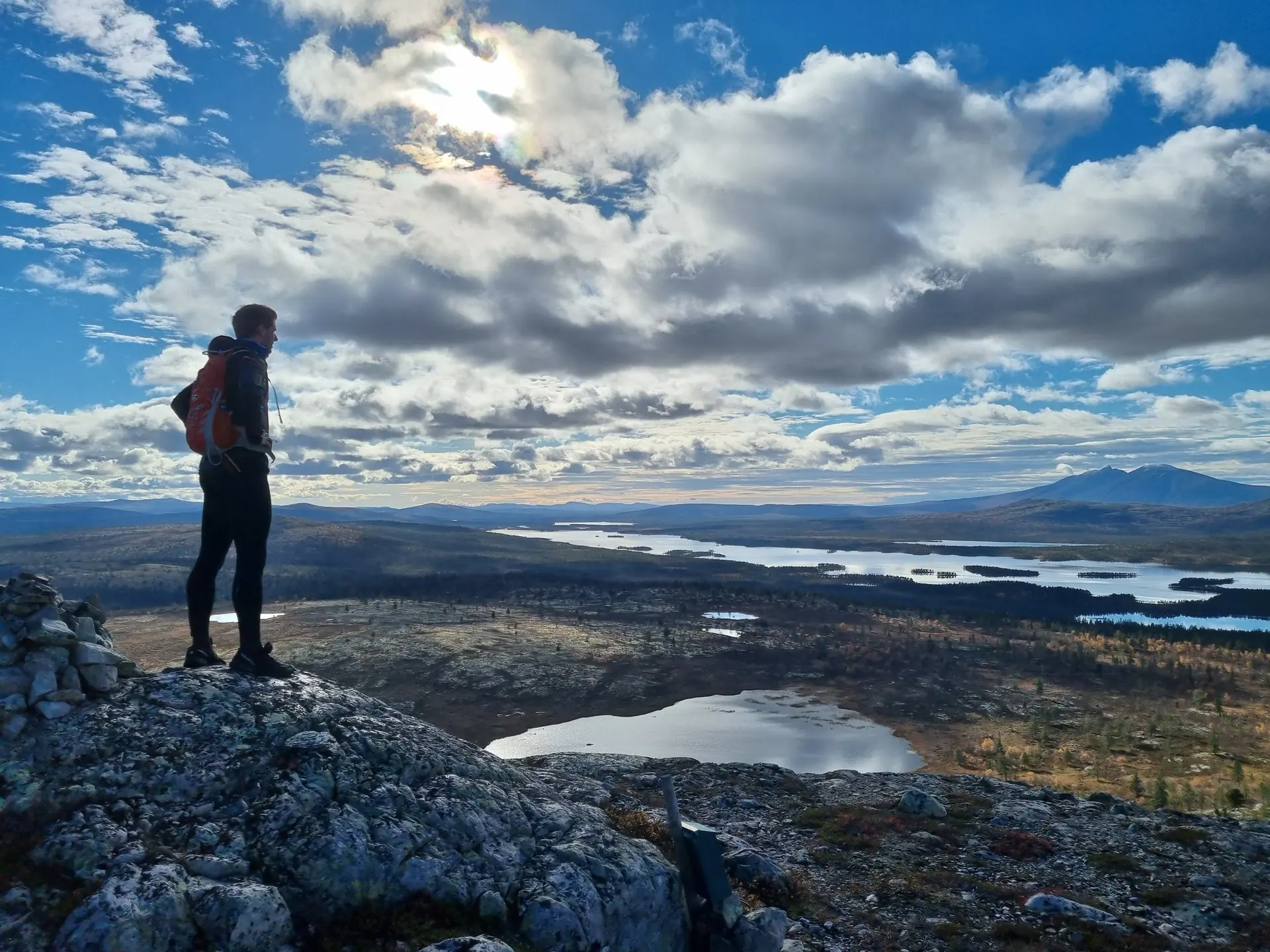
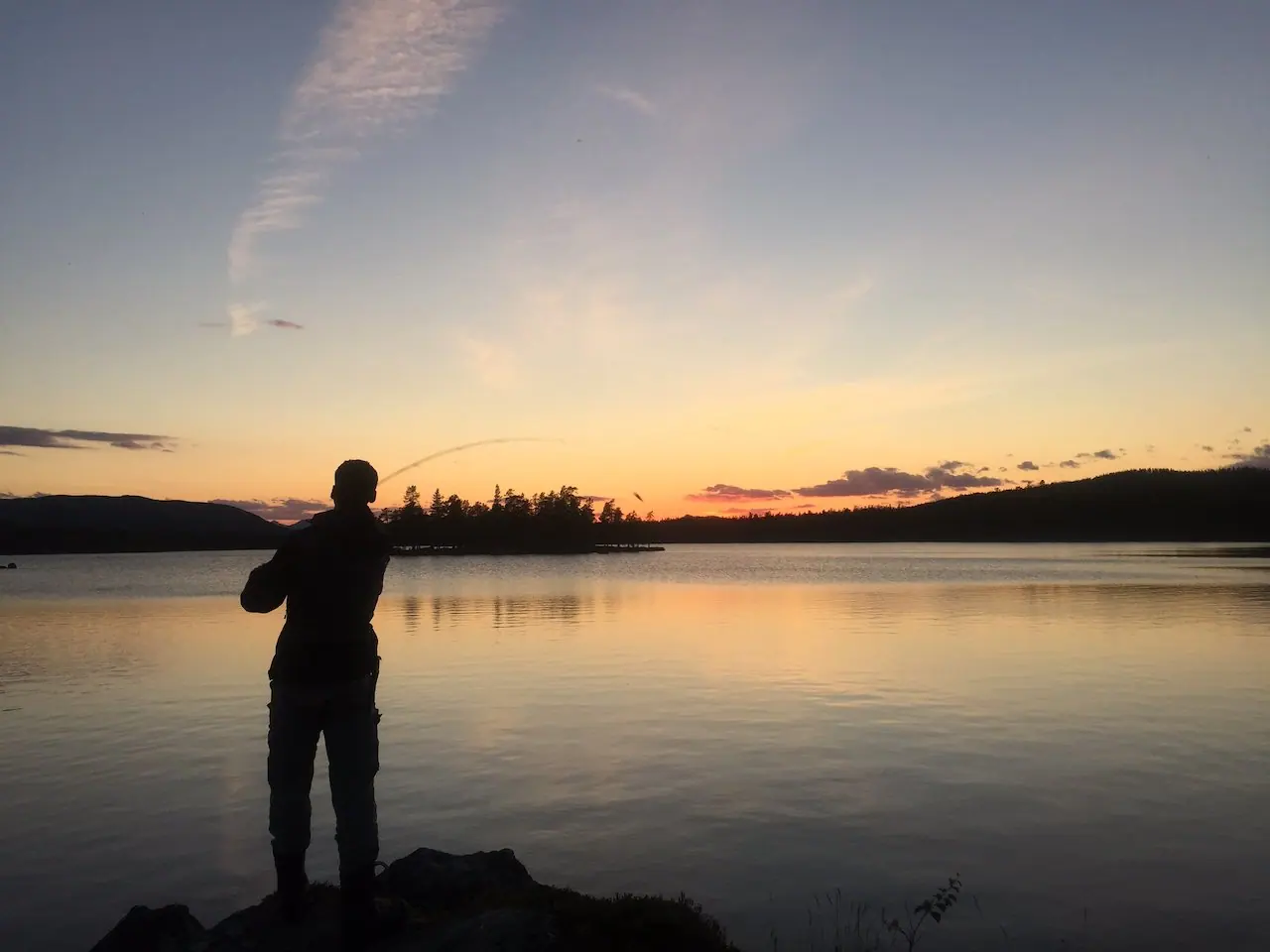
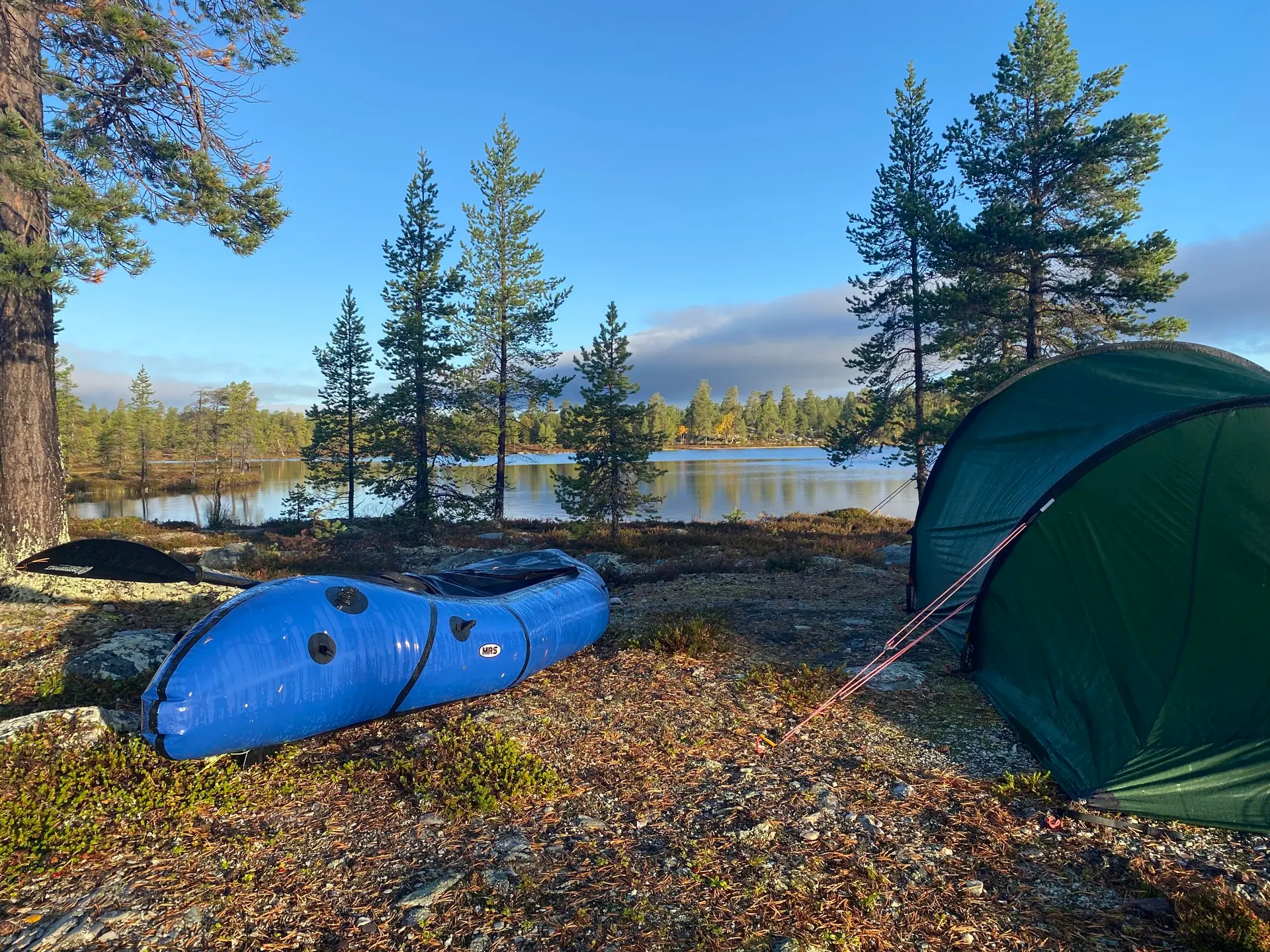
Lake Femund is the third largest lake in Norway and one of the least visited. Around it lie forests that have never been cleared, a national park with no roads through it, and nine hundred smaller waters that most maps do not bother to name.
We sit at the southern end, in Sorken, where the Sorka river runs into the lake. Since 1974 this has been a place people arrive at with a car full of gear and leave from with a plan. We rent the boats, lend the knowledge, and stay out of the way.
Pick what you need and the total updates as you go — including the automatic weekly discount from day seven.
The region
Nine hundred lakes. One place to start.
Tap a route to trace it across the region. Every one of them starts at our dock.
Peaceful Jyltingsmarka
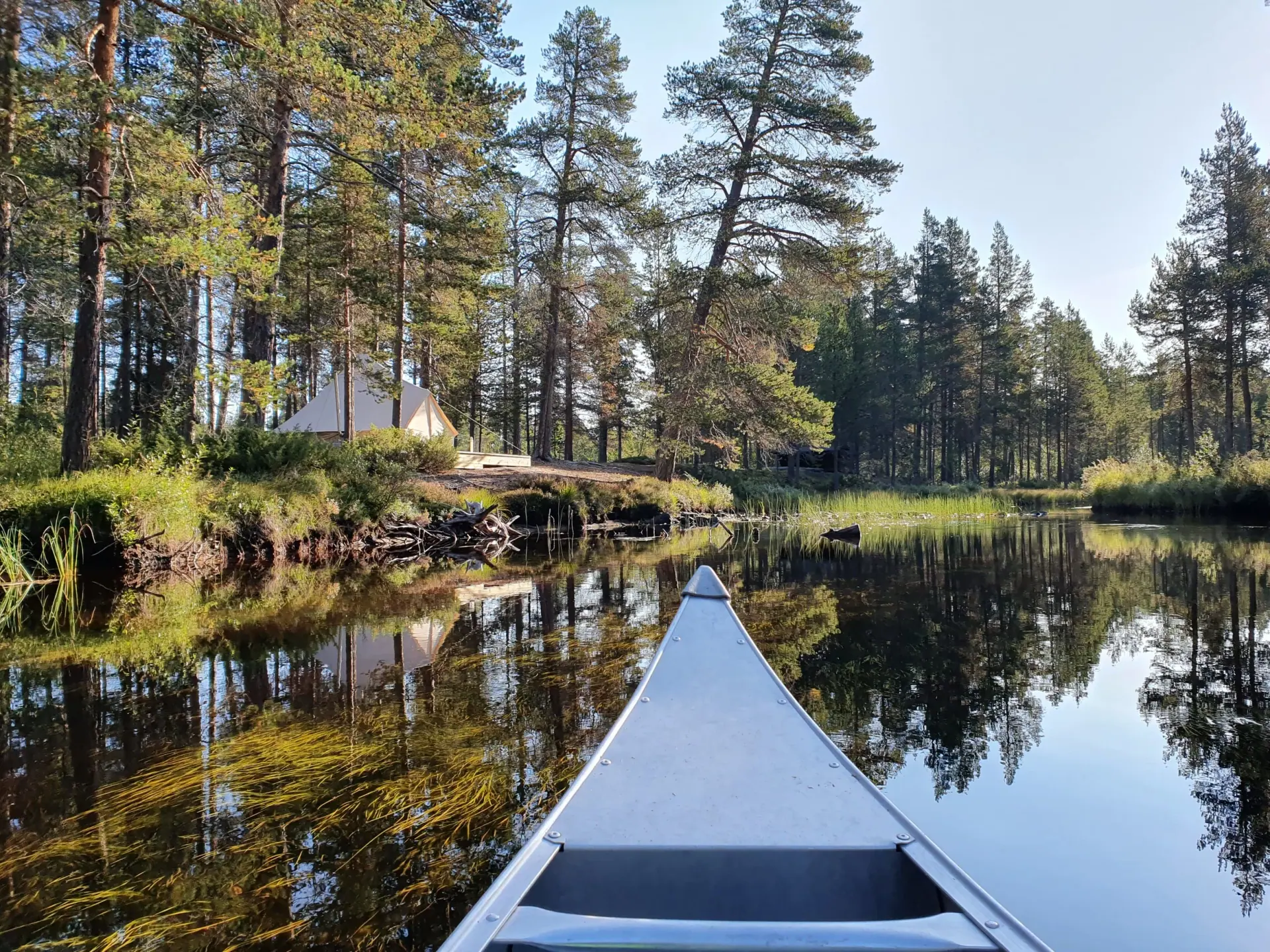
Small, calm lakes just 7 km east of camp — the gentlest possible introduction to Norwegian canoe country.
Short portages, sheltered water and easy camp spots make this the route we send families and first-timers on. You can paddle it as a long afternoon or stretch it into three unhurried days with a hike up into Gutulia.
White sand beaches and quiet coves on cold, clear wilderness water.
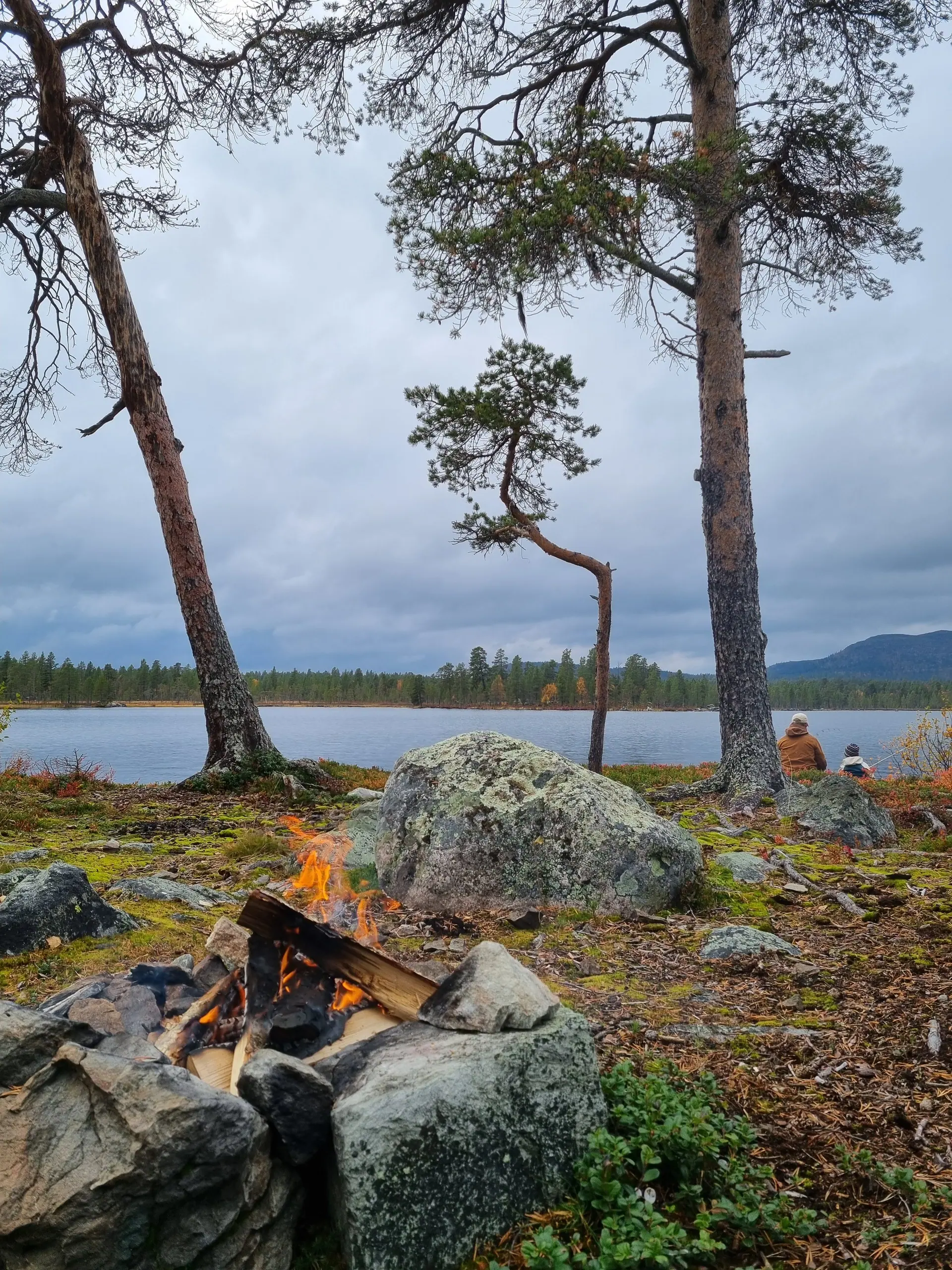
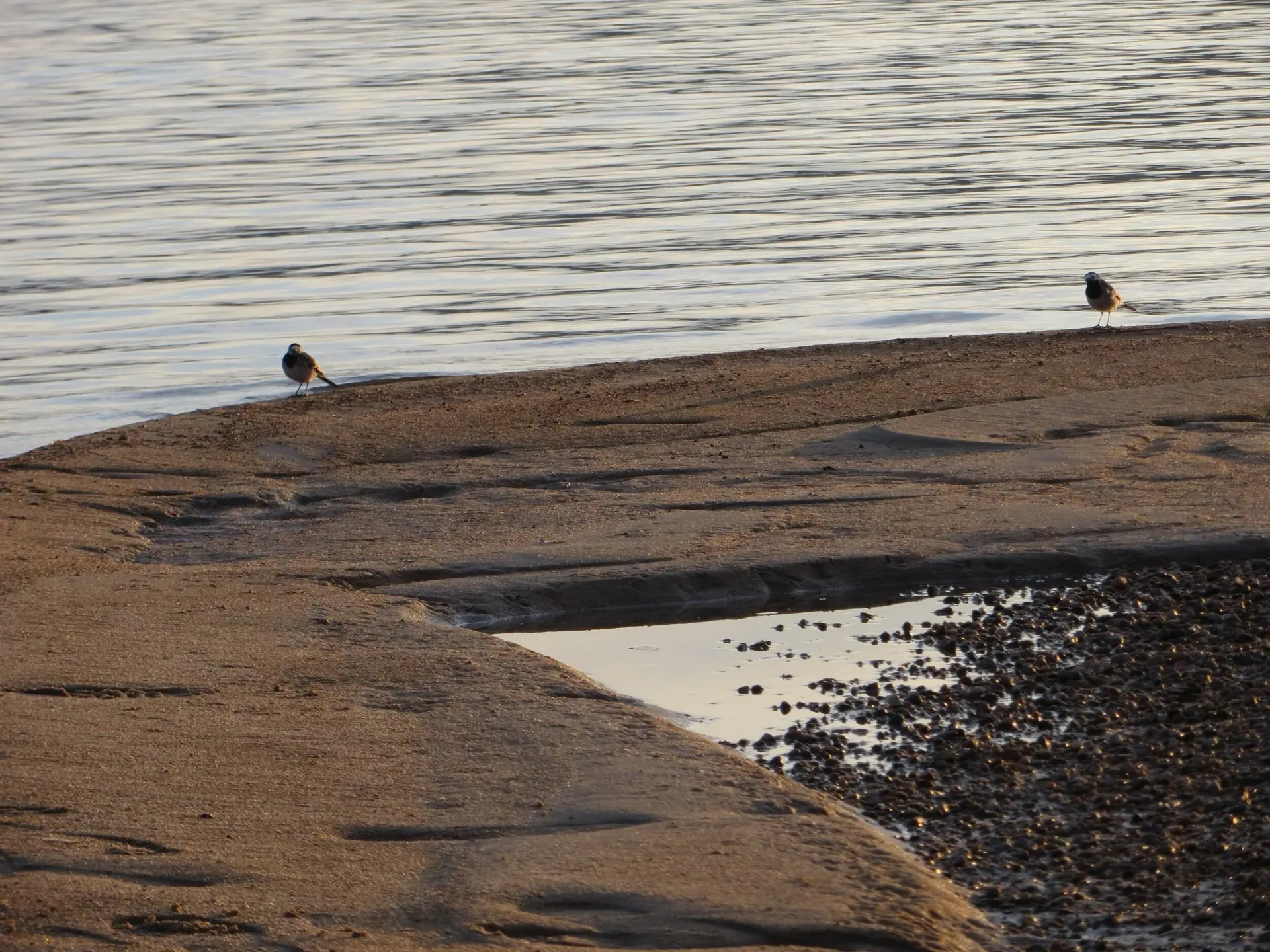
People do not expect beaches this far north. Femund and Isteren are lined with them — pale sand, shallow shelves, and water so clear you can count stones three metres down. Watch the wind: both lakes are big enough to build real waves by midday.
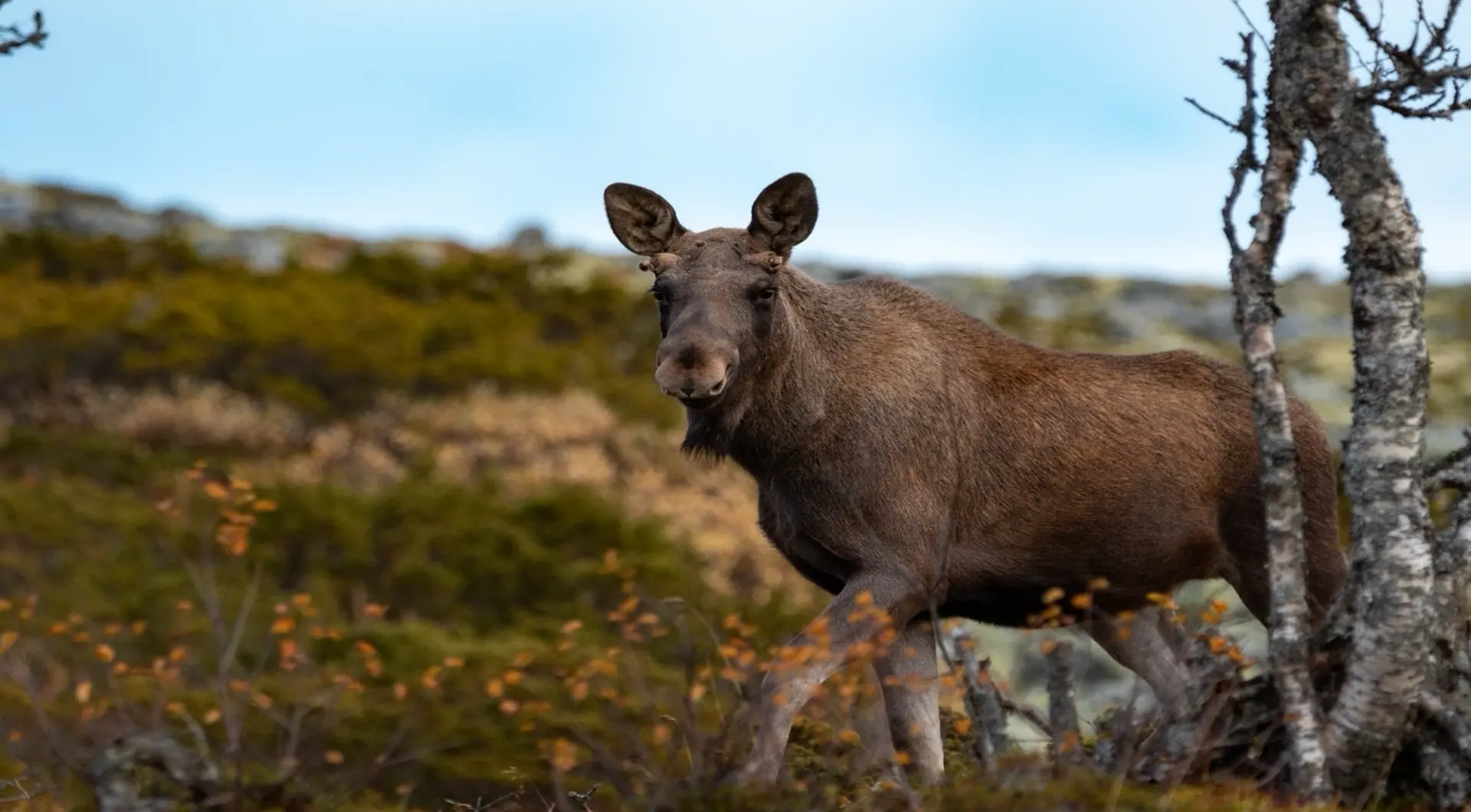
Two guided hours through moose country with Vilde, our wildlife expert.
An evening drive along the forest roads where the moose come out to feed, with a talk on how they live here and something warm to drink. The only guided trip we run — and the one children remember longest.
Sleep in the same bed every night, paddle somewhere new every day.
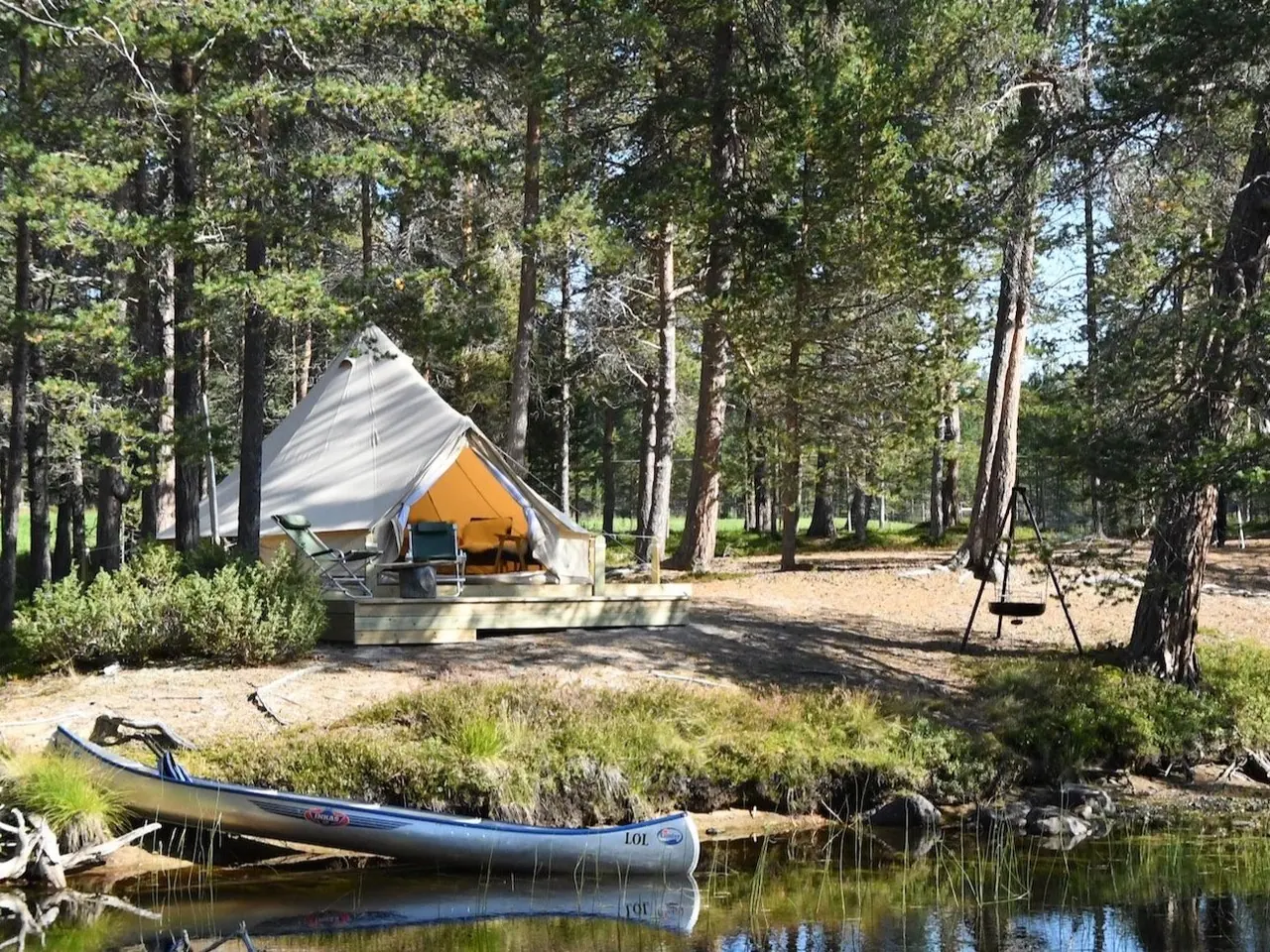
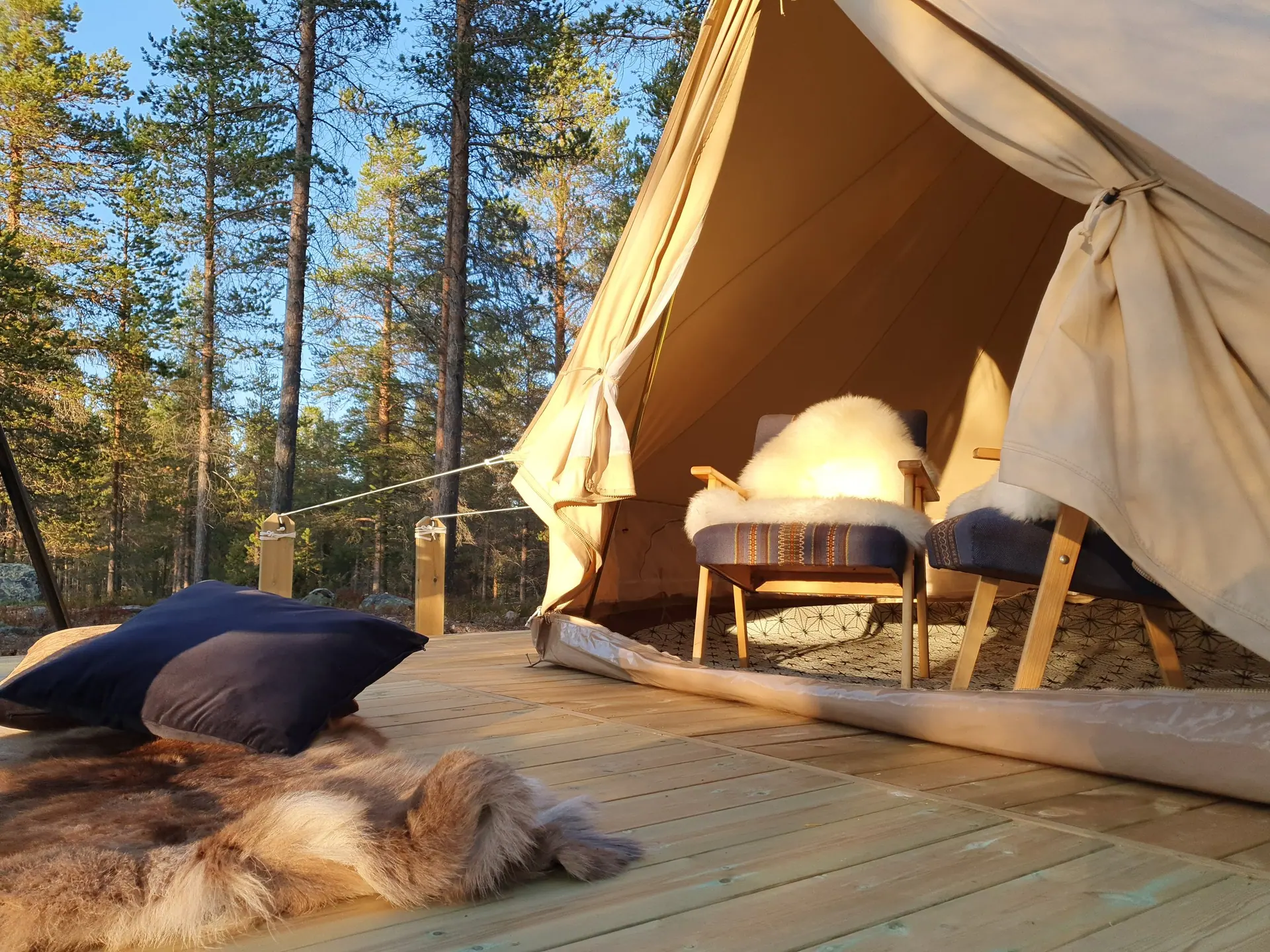
Book a tipi or a cabin and use camp as your launchpad. Day paddles on the Sorka and Femund, hikes into the hills, a beaver evening, a sauna when you get back. All the wilderness, none of the wet packing.
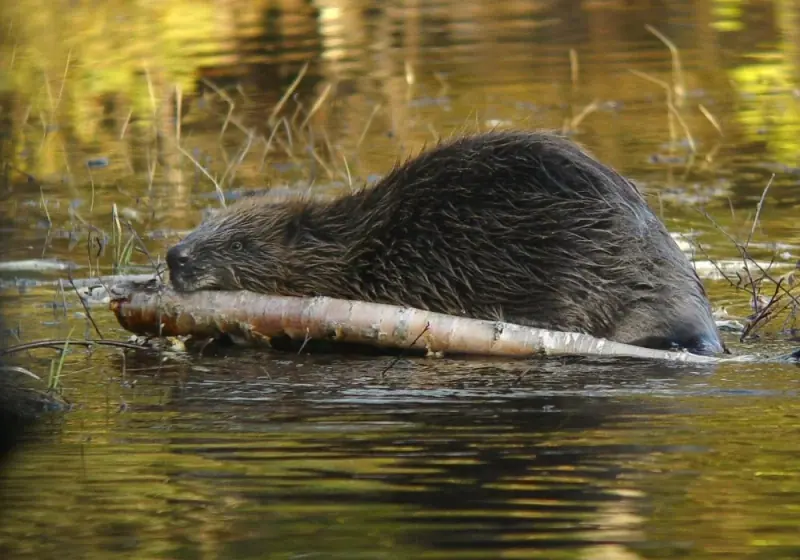
An evening paddle up the Sorka after the shy, fascinating beaver.
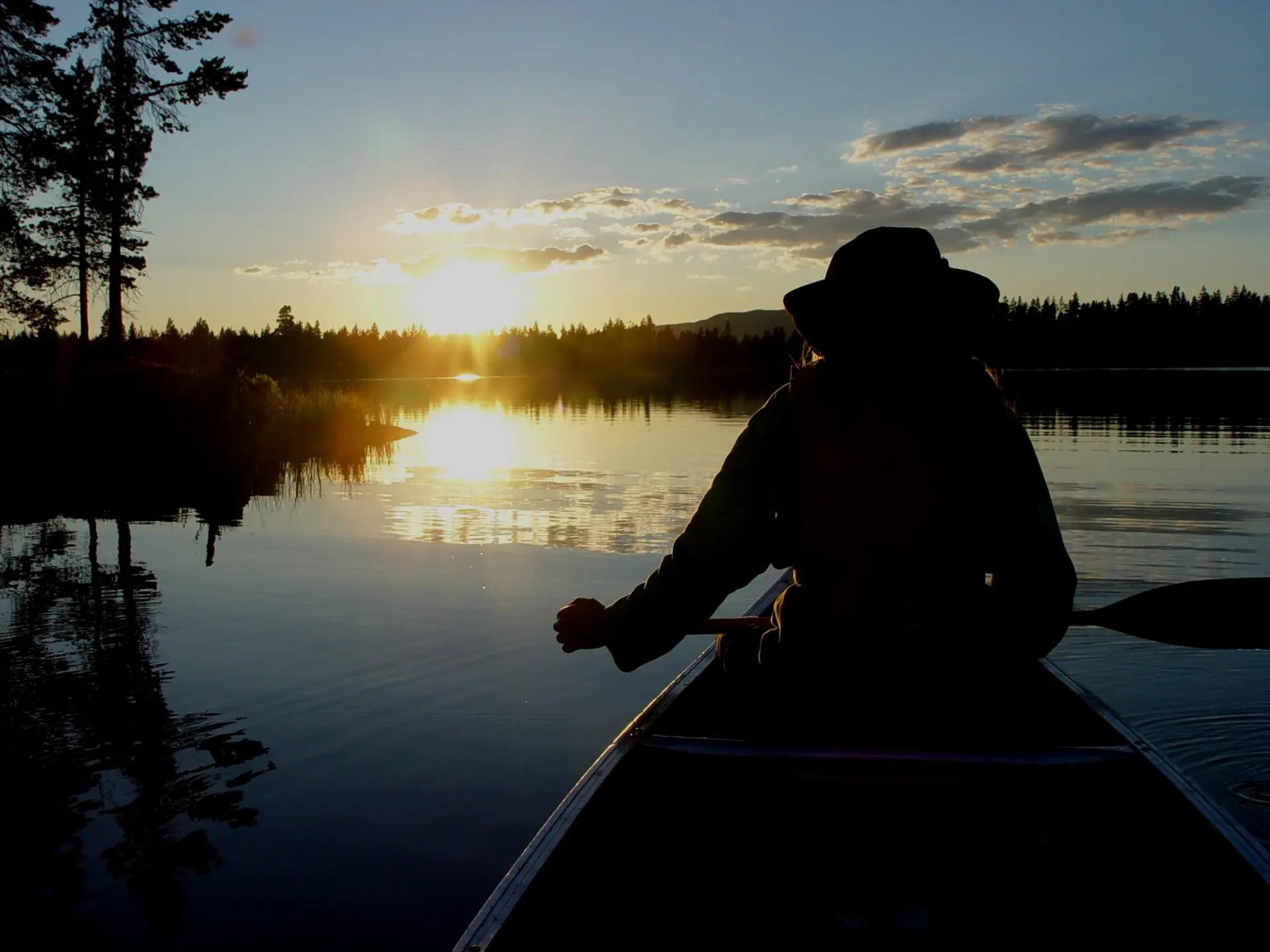
Push off from camp as the light goes long and gold. Paddle quietly, keep talking to a whisper, and watch the banks. The tail-slap when one dives is a sound you will not forget.
One of Norway’s oldest and most captivating wilderness areas — and no mobile coverage at all.
The big one. Chains of lakes linked by portages, reindeer on the ridges, and rock scoured bare by ice. Plan for ten days if you want to do it properly, and take the map seriously — from here on there is little to no coverage.
Mountain lakes, a summit or two, and some of the best fishing in the region.
Higher, harder and emptier than Jyltingsmarka. Paddle the mountain lakes, leave the boat and walk up for the view across to Sweden, then fish the evening rise. Bring layers — it is properly cold up here after sunset.
The long one. Three big lakes, beach camps, and reindeer, moose and osprey along the way.
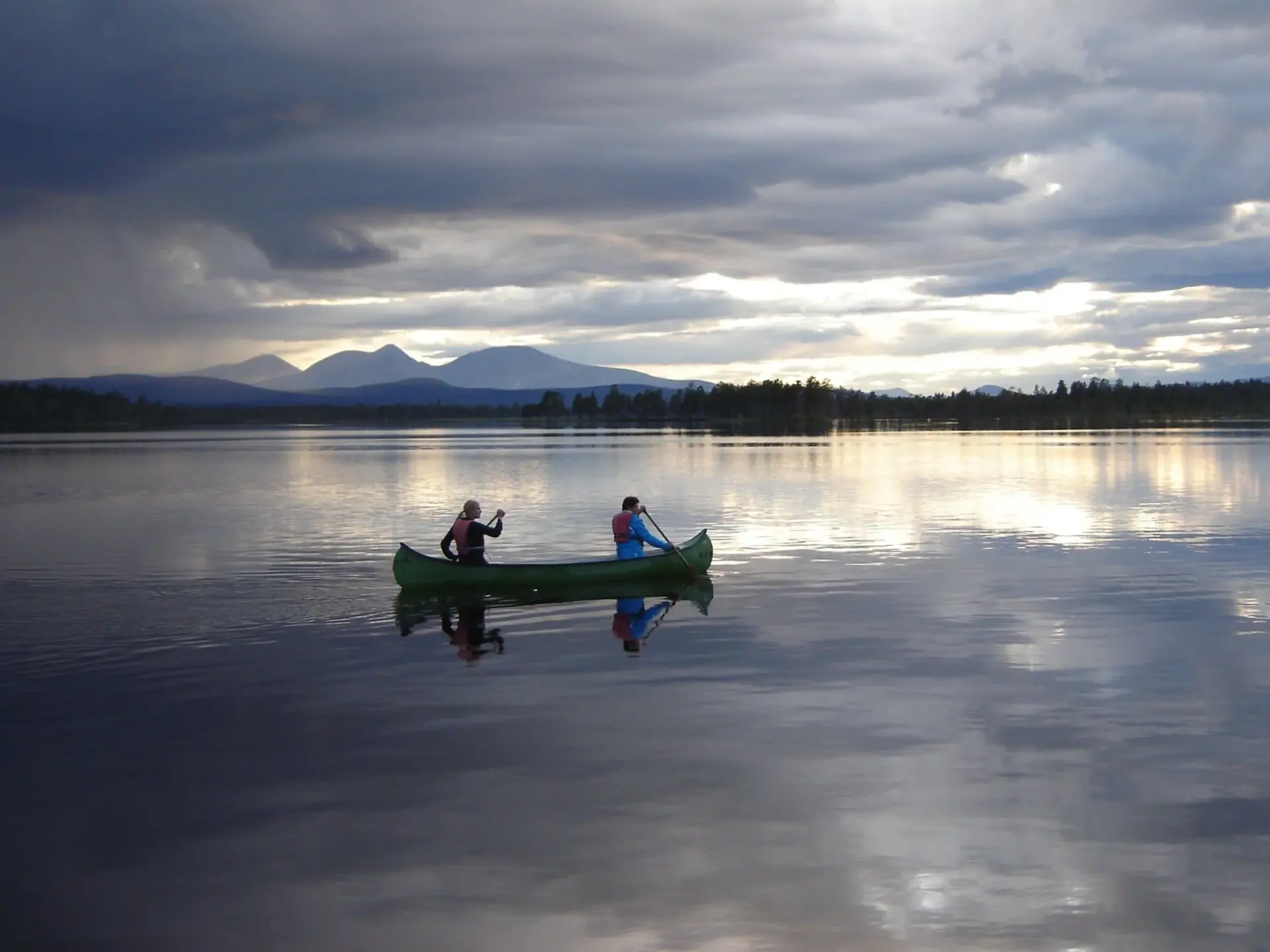
For paddlers who want distance. You will cross open water where the wind decides your schedule, camp on sand, and eat what you catch. Twelve days is comfortable; seven is a push. We will go over the wind plan with you before you leave.
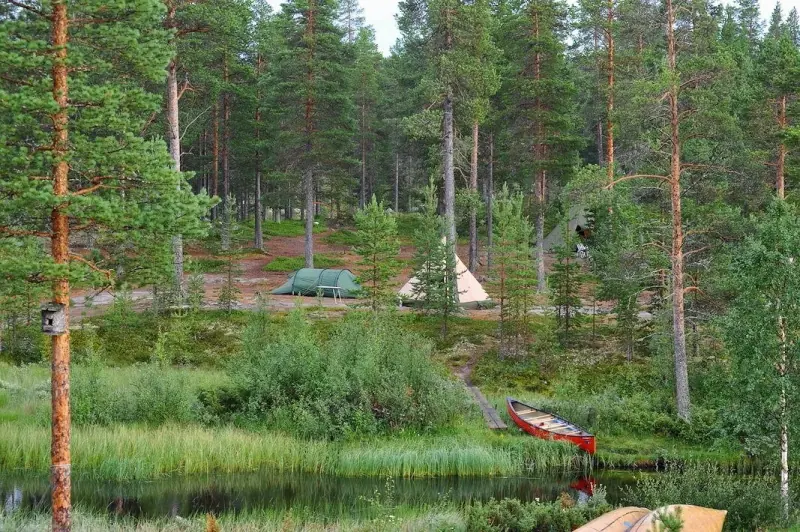
Paddles, life vests and parking are included. Rent for three days or more and a tent pitch at the wilderness camp comes with it. Food and gear packages can be added in the same basket.
02
We sit down with a map
On arrival we plan the route around your group, the wind and the week you have. Safety briefing, leave-no-trace, and everything else you need — fishing licences, maps, extra gear, a lift to the start.
03
Off you go
At your own pace, whatever your experience. Some people are back for supper. Some we do not see for ten days.
Things to do
Things to do
Canoeing
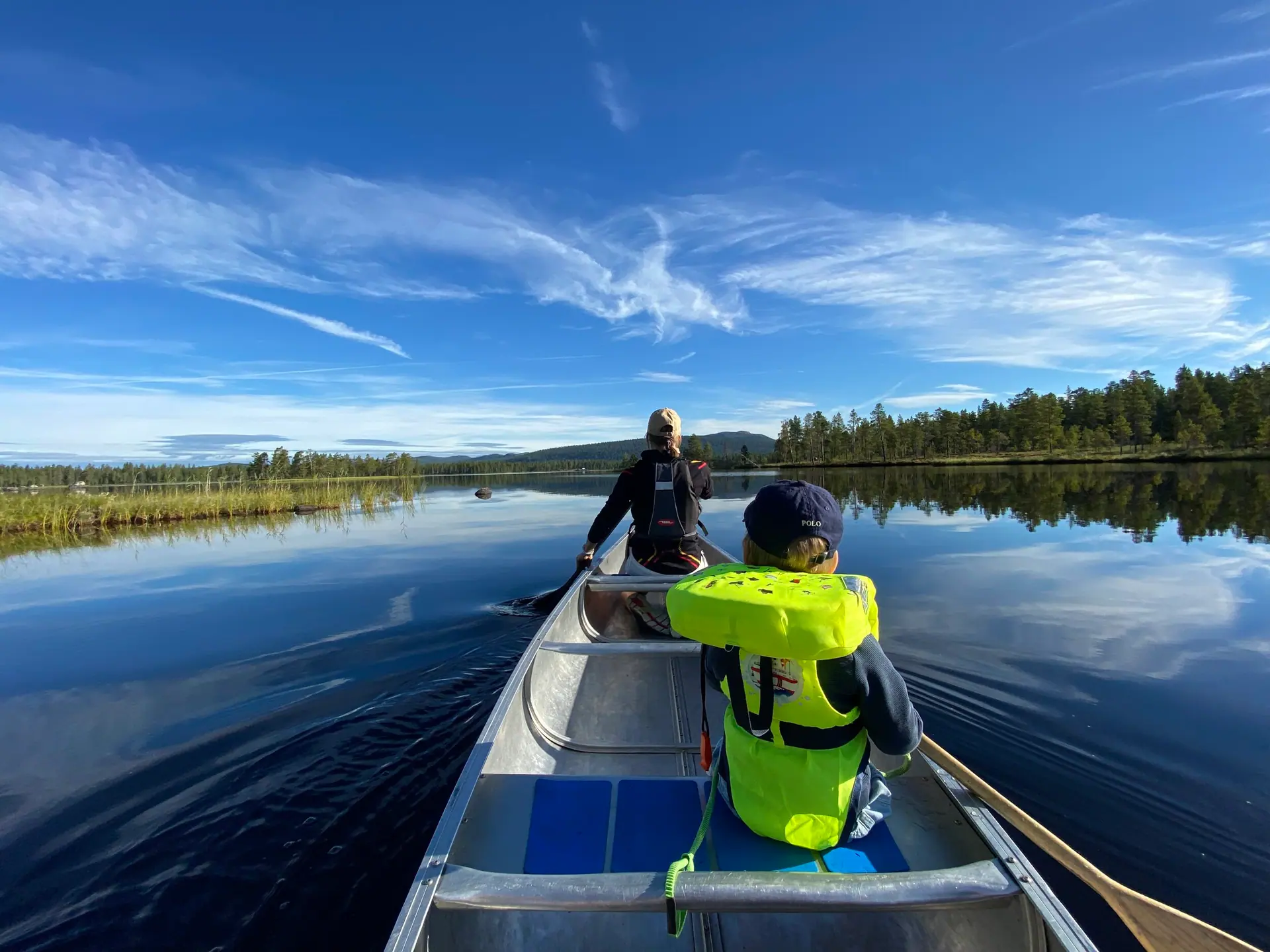
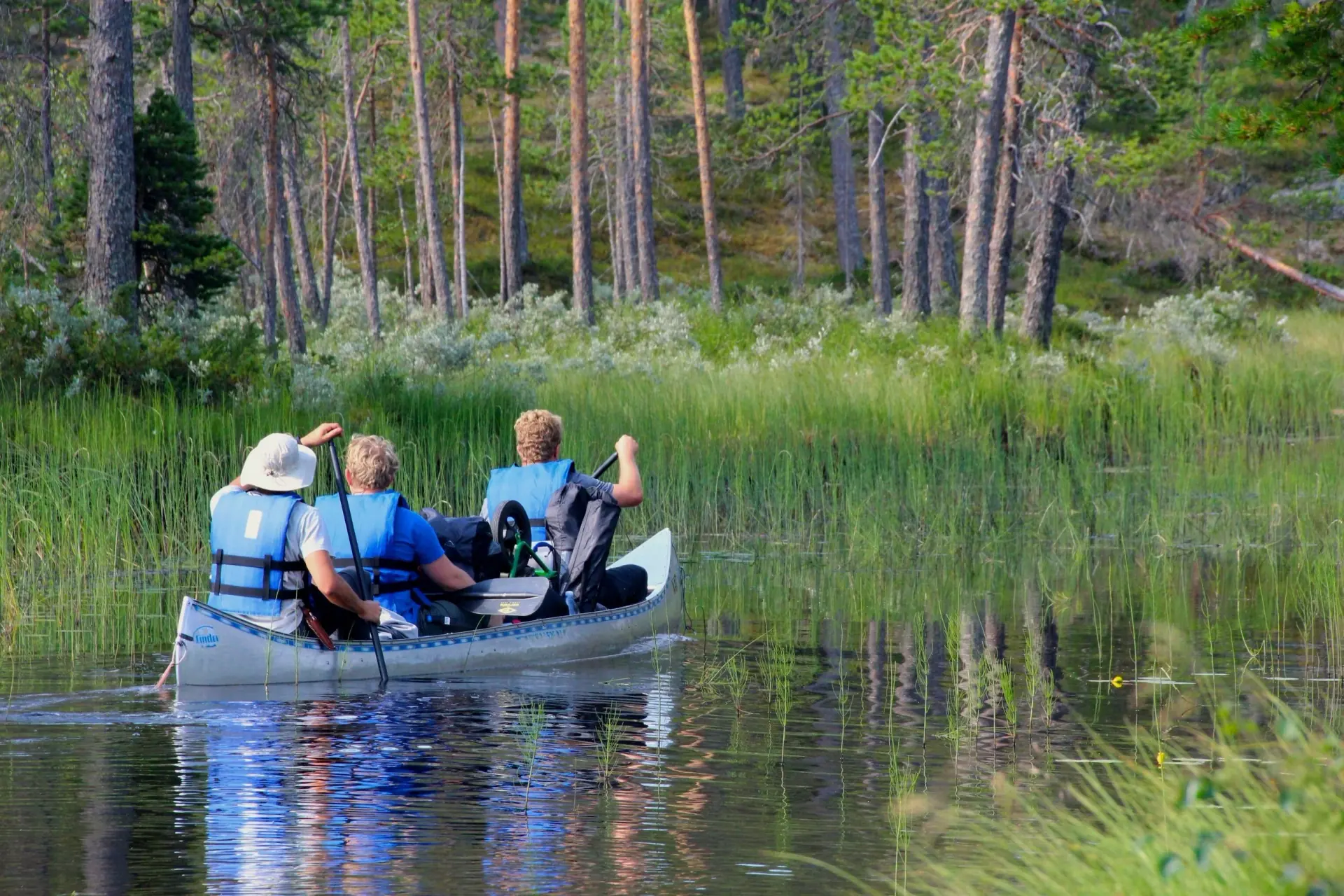
Paddle down the Sorka straight from camp and eat lunch on the shore of Lake Femund, or head further out.
Wildlife watching
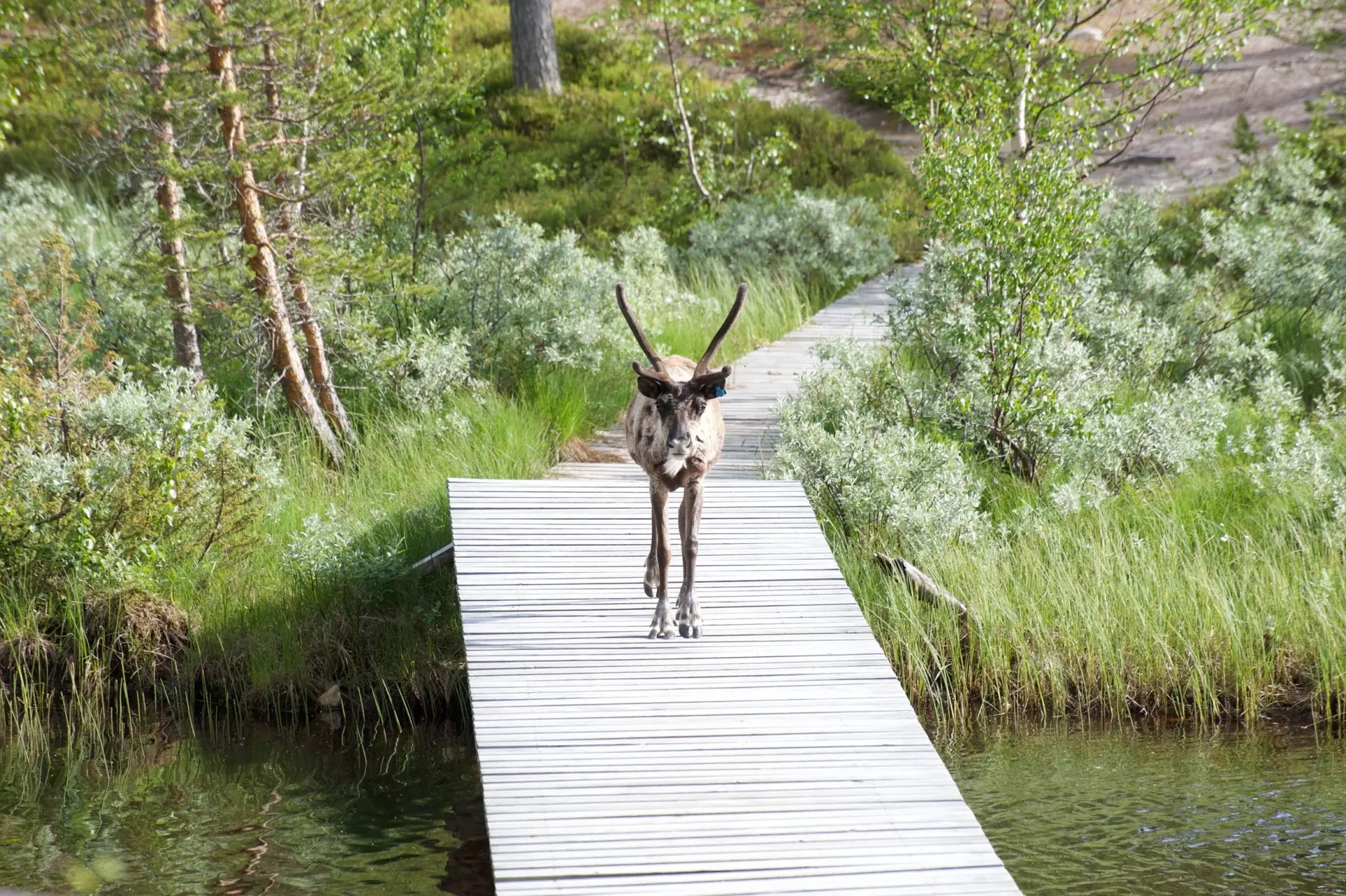
Beavers in the evening, reindeer wandering through camp, moose on a guided safari. Wildlife is never far away.
Hiking
From gentle forest trails to long mountain routes, with wide views across the whole Femund region.
Fishing
Over 900 lakes, ponds and rivers holding trout, grayling, whitefish, perch, Arctic char and pike. Licences sold at camp.
Sauna
Warm up in our sauna and cool off with a plunge in the river — the right way to end a day on the water.
Packrafting
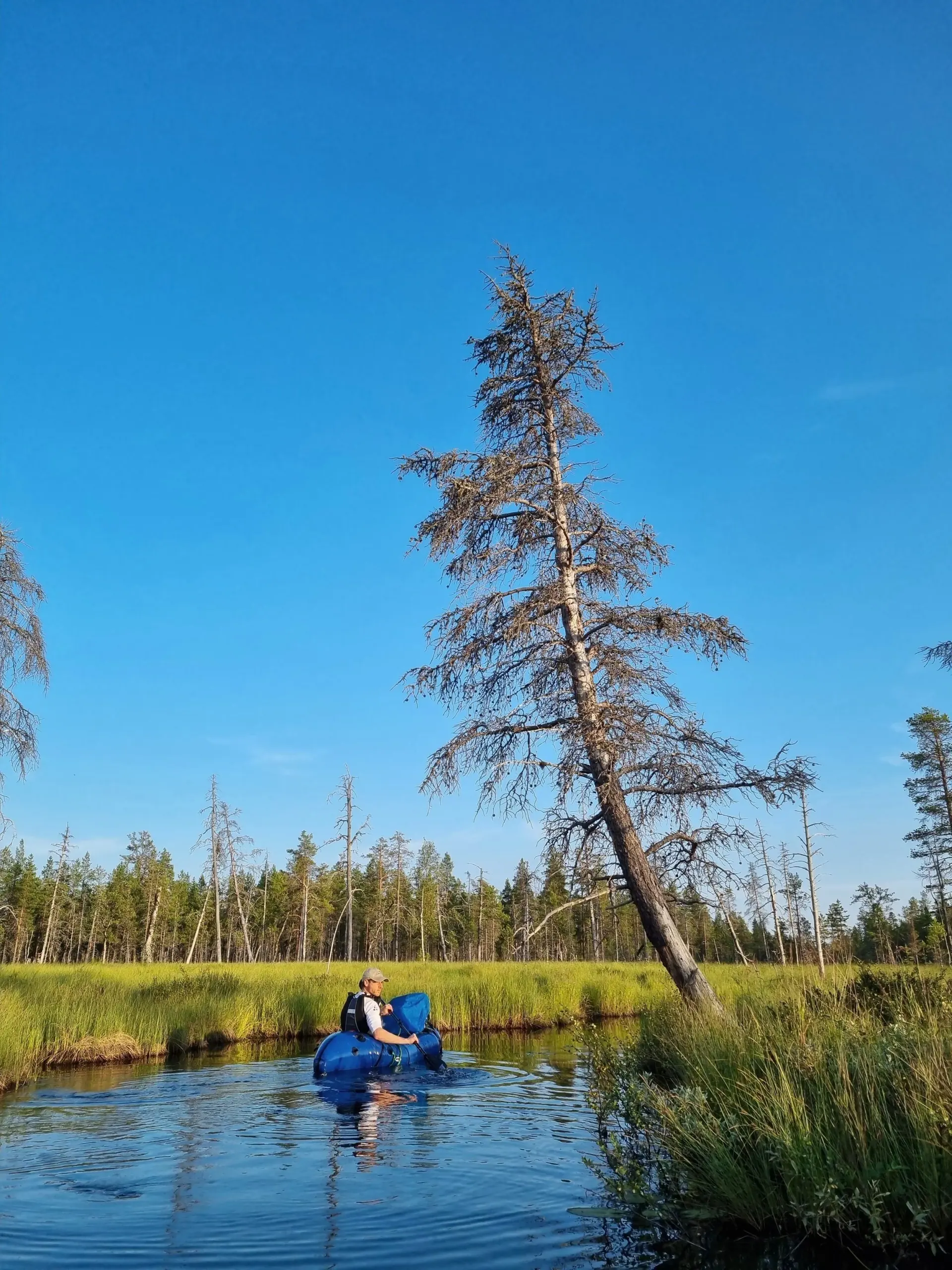
Launch straight from camp, or carry it up into the hills and find water no canoe will ever reach.
When to come
When to come
The season runs from ice-out in May to the first hard frosts in October. Each month feels like a different place.
May
2–14 °C
Ice-out
The lake opens. Cold, empty, and the light stretches later every night. No mosquitoes at all.
June
6–20 °C
Endless light
Nights that never properly darken. The best paddling light of the year. Mosquitoes arrive near the end of the month.
July
10–25 °C
Swimming weather
Warmest water, best beaches, busiest month — which here means you might see two other canoes in a day. Book early.
August
8–22 °C
Berries and calm
Cloudberries, blueberries, fewer insects, warm water and darkening nights. Many of us think this is the month.
September
2–15 °C
Colour and northern lights
The birch turns, the crowds vanish, the fishing peaks, and on a clear cold night the aurora shows up over the lake.
October
−4–8 °C
Cabin season
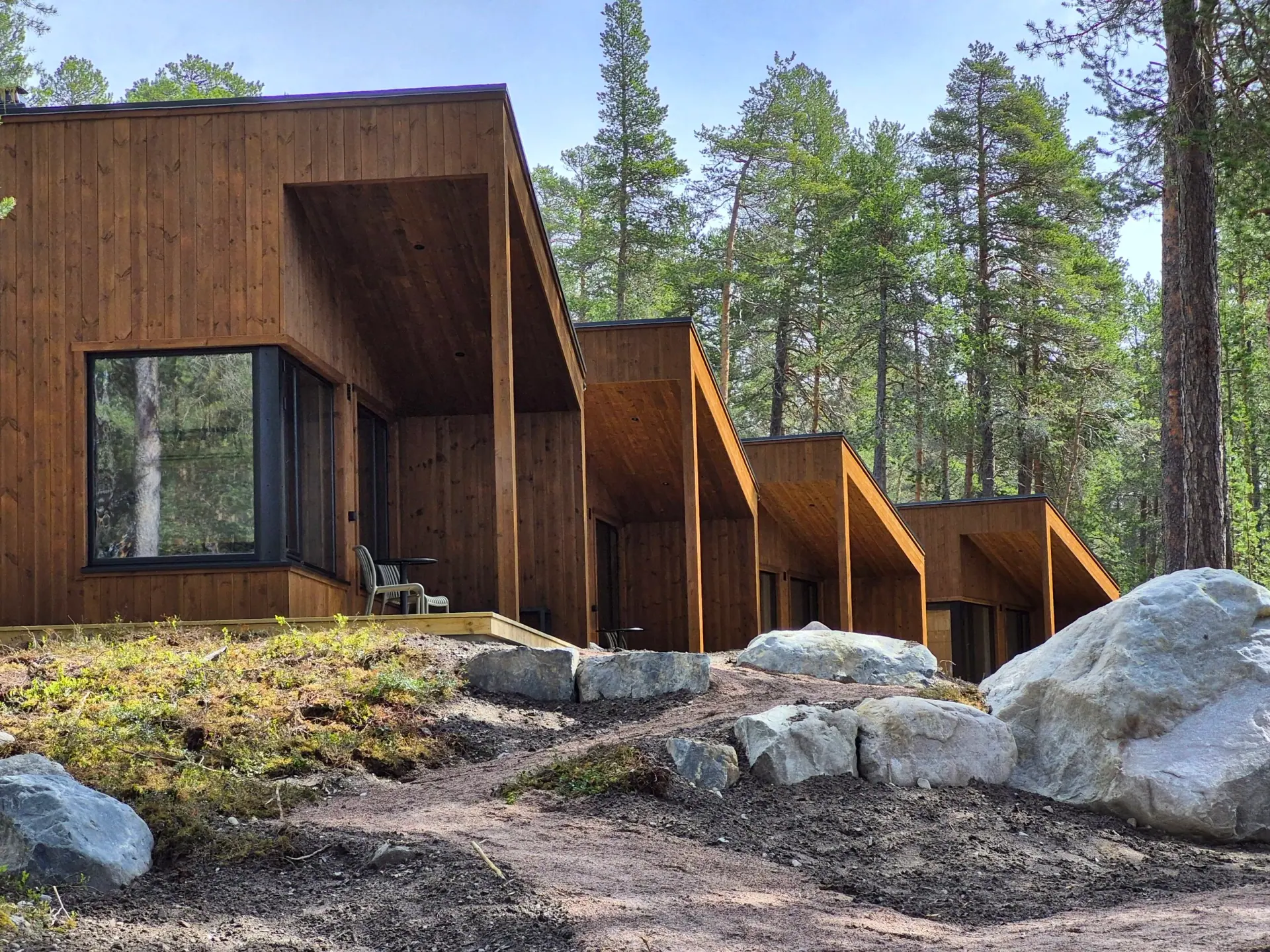
Paddling winds down and the nature cabins come into their own: floor heating, wood stove, frost on the terrace.
What guests say
4.7on Google · 106 reviews
They spent an hour with us and a map before we left, and every single thing they said about the wind turned out to be right. Six days, two portages, no other people.
Marieke & JoostNetherlands
The tipi was warmer than our house. Our seven-year-old fell asleep to the sound of the river and has asked about the beavers every week since.
Familie BrandtGermany
Been paddling Femundsmarka for twenty years and still book the canoe here. Aluminium boats, proper kit, and people who actually know the water.